

The inside of a car takes a beating. School drop-offs, weekend coffee runs, tradie boots after a day on site, the dog on the back seat, kids and their hands full of biscuit crumbs. It all adds up, and unlike the outside of the car, you cannot just point a hose at it.
Cleaning the interior properly does not take long once you have a sensible order to work in. This car interior cleaning guide walks through the steps in the order they actually work best, from the vacuum through to sorting out a smell that won’t shift, and points out the bits most people miss. When you are done, the car should feel noticeably better to sit in, not just look tidier from the outside.
Start With a Vacuum
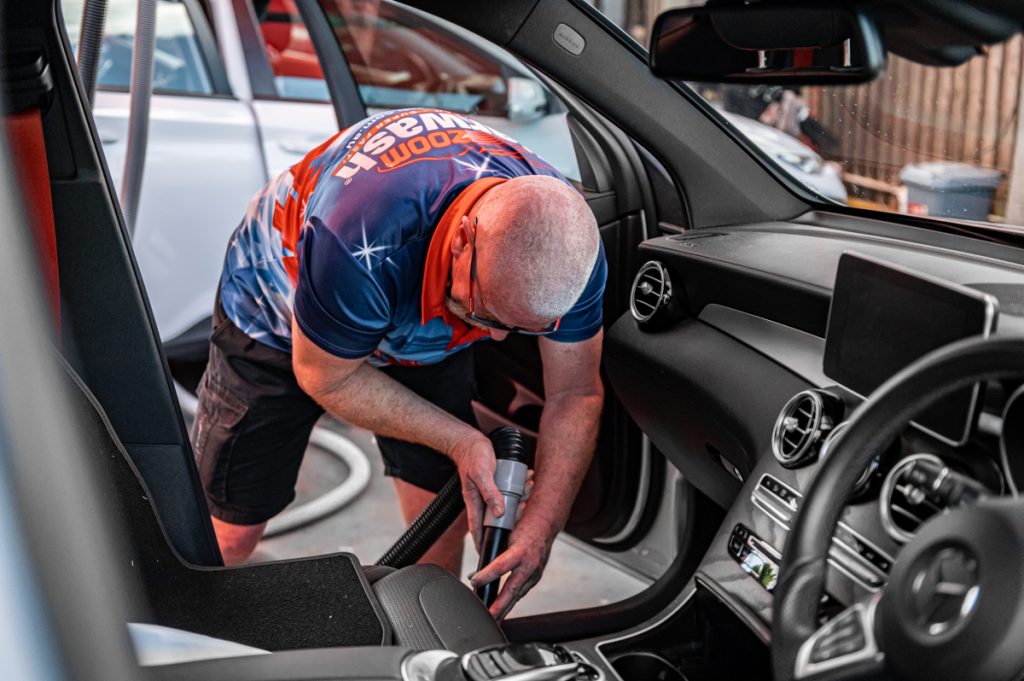
Every interior clean starts with a vacuum, and it has to be the first step. If you wipe down surfaces before you vacuum, you push crumbs and grit into corners you cannot reach easily, and any spray you have used will collect the dust rather than clean it off.
Work top to bottom and back to front. Start with the seats, get under them, then move through the footwells, the boot and the mats last. Pull the mats out of the car entirely and vacuum them on the ground, then give them a shake before they go back in.
The bits people commonly miss:
- The seams where the seat back meets the seat base, where coins and food end up.
- Between the centre console and the front seats.
- Under the pedals and along the door sills.
- The boot lip and the space around the spare tyre well.
A domestic vacuum will not have the reach or the suction to do this well. Our self serve vacuum bays are set up for exactly this, with commercial-grade suction and tap-and-pay at every bay, available seven days at both of our Brisbane locations.
Dashboard, Console and Trim
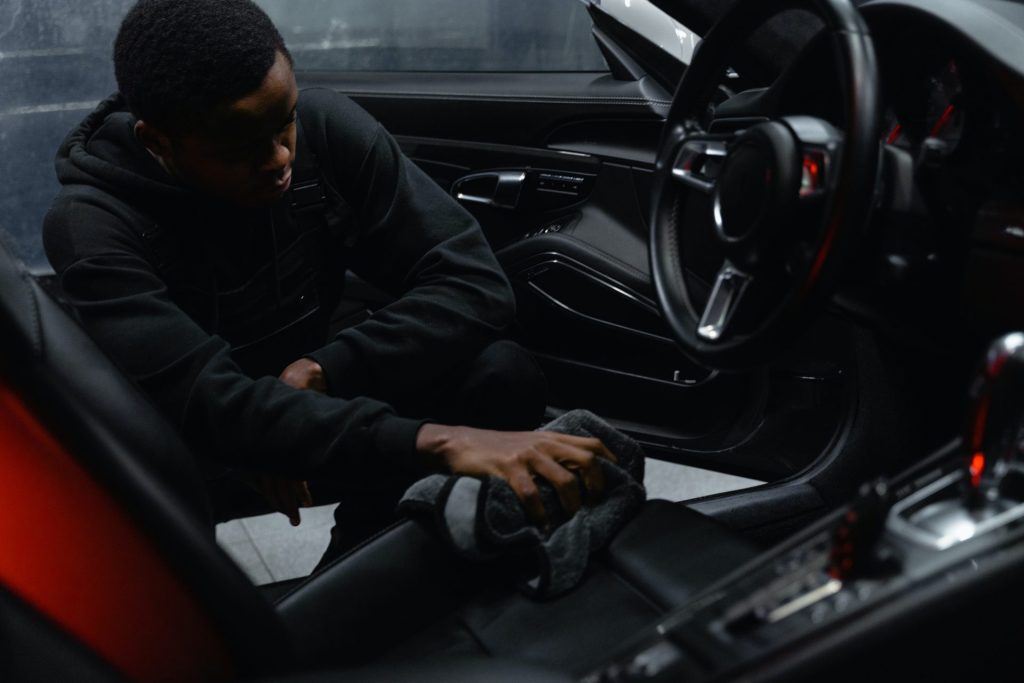
Once the loose stuff is out, the hard surfaces get their turn. The dashboard, centre console, door cards, air vents and steering wheel all pick up dust and skin oils from regular use.
A microfibre cloth slightly damp with water handles most of it. For anything sticky, an interior cleaner made for cars is safer than household spray. Kitchen and bathroom cleaners are formulated for hard tiles and porcelain, not car interior plastics, and they can dry the surface out or leave a haze.
Work in this order:
- Air vents first, using a soft brush or cotton bud to loosen dust before it lands on the surfaces below.
- Dashboard and instrument cluster.
- Steering wheel, stalks and gear shifter.
- Centre console, cup holders and armrest tray.
- Door cards, handles and window switches.
Cup holders are almost always the worst part of the console. Pull them out if they lift, and soak them in warm soapy water for a few minutes rather than trying to scrub them in place.
Once the surfaces are clean, a plastic dressing brings the finish back and helps protect it from UV. Use it sparingly, since too much leaves a glare on the dashboard that reflects in the windscreen.
Glass and Windows
Interior glass is worth doing properly because it makes a bigger visual difference than almost any other step. The inside of a windscreen picks up a fine film that shows up badly against low sun.
Use a glass cleaner made for automotive use, not a household one containing ammonia, which can damage window tinting. Spray the cloth rather than the glass, so the cleaner does not run down onto the dashboard.
Two microfibre cloths work best. The first applies the cleaner and does the lifting. The second, dry, buffs the glass clear. One cloth on its own leaves streaks that only show up once the sun hits from a low angle. The inside of the windscreen at the base is the hardest bit to reach, and a microfibre cloth wrapped around a flat stick gets in there without leaving marks.
Seats and Upholstery

Seats need a different approach depending on what they are made of.
Fabric or cloth seats benefit from a proper upholstery cleaner and a soft brush, worked in small sections. Blot with a clean microfibre cloth to lift the dirt out rather than rubbing it in. Do not soak the fabric, since the padding underneath can start to smell if it stays wet.
Leather seats need a leather cleaner followed by a conditioner. The cleaner lifts sweat, sunscreen and body oils. The conditioner keeps the leather supple and stops it from cracking, particularly on the driver’s seat bolster and where the sun hits.
Vinyl or synthetic leather sits in between. A general interior cleaner is usually fine, followed by a light dressing.
Work top down and back to front, same as with the vacuum. Do the headrests, seat backs, bases, then the seat belts. Seat belts get grimy and rarely get cleaned. A microfibre cloth with warm soapy water works well, then let the belt dry fully retracted only once it is dry.
Dealing With Odours

Most car smells are absorbed into the fabric and upholstery rather than sitting in the air. Spraying an air freshener over the top masks it for an afternoon, then it comes back.
The real fix is to find what is causing it and remove it. Common culprits are food that has slipped between the seats, a damp towel in the boot, wet floor mats, or the air conditioning system itself if the smell is worst when you first turn it on.
For a general reset, vacuum thoroughly first, including under the seats, wipe down all hard surfaces, and run an upholstery cleaner over the fabric and carpets with a soft brush. Leave the windows down on a warm day for an hour or two.
If the smell is worst when the air conditioning starts, that is almost always bacteria on the evaporator behind the dashboard. A domestic clean will not reach it. An air conditioning antibacterial treatment is one of the extras included in our full detailing packages and is worth adding on if the smell keeps coming back after everything else.
When to Book a Professional Interior Detail
There is a point where a home clean stops being enough. Set-in stains, a smell that will not lift, a car being prepared for sale, or one that has just had a big life event like a puppy or a spilled coffee needs more than a vacuum and a wipe down.
Our car detailing services run from a quick Wash only through to a full pre-sales detail that can include seat and carpet shampooing, leather cleaning and conditioning and the air conditioning antibacterial treatment. Interior detailing can be added to any exterior wash package for regular upkeep, covering wheel gleam, plastic dressing, a boot vacuum and a fragranced cabin.
A Wash with a 20min added Vacuum takes about thirty minutes to complete and an interior clean about forty-five minutes to an hour, so we can sort it while you grab a coffee and relax in our on-site lounge. Detailing runs Monday to Saturday with the last detail taken at 4 pm, and no booking is required.
Frequently Asked Questions
How often should I clean the interior of my car?
A quick vacuum and wipe down every two to three weeks keeps most cars in good shape, with a more thorough clean every couple of months. Cars that carry kids, dogs or work gear regularly need it more often. A proper interior detail once or twice a year handles what a domestic clean cannot reach.
Where can I find a car vacuum near me in Brisbane?
Our self-serve vacuum bays are available seven days a week at both of our Brisbane locations, Alderley on the northside and Holland Park on the southside. The bays run on tap and pay, and the vacuums are commercial grade with the reach and suction to get into corners a home vacuum cannot.
Can I use household cleaners on my car interior?
Better not to. Household sprays are made for tiles, glass and hard surfaces around the home, and they can dry out or damage the plastics, leather and fabric used in car interiors. Automotive interior cleaners are formulated for the materials in a car and are worth using instead. You can purchase all the products required onsite in our self serve vending machines.
What is included in a professional interior detail?
Our interior detailing includes vacuuming, cleaning windows, dressing plastics and applying fragrance as standard. You can add on any extra services to all washes including but not limited to carpet and seat shampooing, leather cleaning and conditioning and an air conditioning antibacterial treatment, which handles smells that keep coming back after a regular clean.
How do I get rid of a smell in my car that will not go away?
Most stubborn smells are held in the fabric, upholstery or air conditioning system rather than the air. A thorough vacuum and an upholstery clean lift a lot of it. If the smell is worst when the air conditioning first starts, that is usually bacteria on the evaporator, and an antibacterial treatment is the fix.
A Cleaner Interior, Sorted
A proper interior clean is one of those jobs that seems bigger than it is until you have done it once in the right order. Vacuum first, work top down, use the right products on the right surfaces, and finish with the glass. Half an hour of that beats an hour of doing it wrong.
For the parts a home setup does not handle, our self serve vacuum bays and interior detailing services are on site at both of our two Brisbane locations, at Alderley and Holland Park. Vacuums are open seven days, detailing runs Monday to Saturday, and neither needs a booking.